
Table of Contents
Baklava is one of those desserts that can turn a simple cup of tea into a little celebration. But here’s the delicious surprise: baklava isn’t just one dessert.
Across Turkey, Greece, the Middle East and beyond, you’ll find baklava in different shapes, textures, fillings and flavors.
Every region has its own traditions, there’s no single definitive version of baklava. So, if you’ve only tried the classic diamond-shaped piece, you’re missing an entire world of baklava.
How Many Types of Baklava Are There?
There’s no official number of baklava varieties. The dessert has evolved across different culinary traditions, so varieties can be distinguished by their country of origin, filling, shape, syrup, texture or preparation method.
At its simplest, baklava is made by layering thin phyllo (filo) pastry, deliberately lighter and crispier. So came as rolled pastries, creamy versions and even mussel-shaped creations.
Depending on the variety, some are packed with pistachios, others with walnuts or hazelnuts. Some are drenched in butter, sweet syrup, honey, spices, rose water, orange blossom water, cardamom or milk.
Here are 15 popular types of baklavas, each worth putting on your must-try list.
Pistachio Baklava (Fıstıklı Baklava)
If you’re trying baklava for the first time, start here. Fıstıklı Baklava is a Turkish favorite made with layers of crisp phyllo, butter and finely ground pistachios.
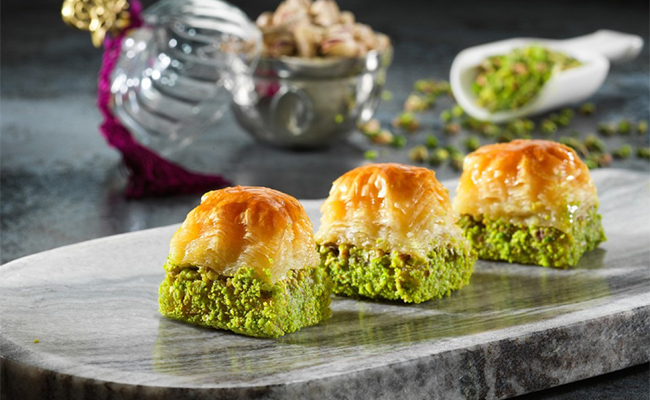
The result? Buttery, crunchy and intensely nutty, with sweetness that lets the pistachios shine.
Walnut Baklava (Cevizli Baklava)
Prefer a deeper, earthier nut flavor? Try Cevizli Baklava. Walnuts give this variety a slightly more robust character than pistachio baklava.
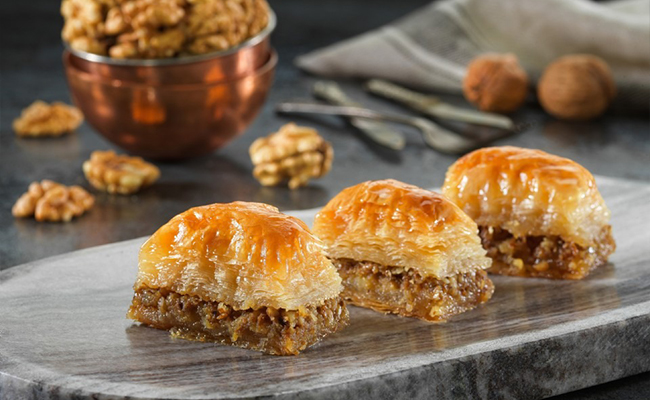
It’s especially popular across Turkish, Greek and Balkan culinary traditions.
Turkish Baklava
Turkish baklava is known for exceptionally thin pastry, generous nuts and a beautifully balanced syrup. Pistachios are particularly popular, although walnuts feature prominently too.
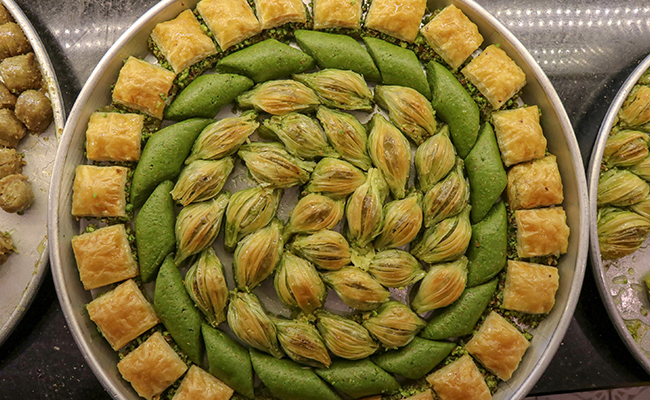
And Turkish baklava isn’t limited to one shape. There are dozens of regional and specialty varieties to discover.
Gaziantep Baklava (Antep Baklava)
Gaziantep is famous for its baklava, particularly versions made with high-quality local pistachios.
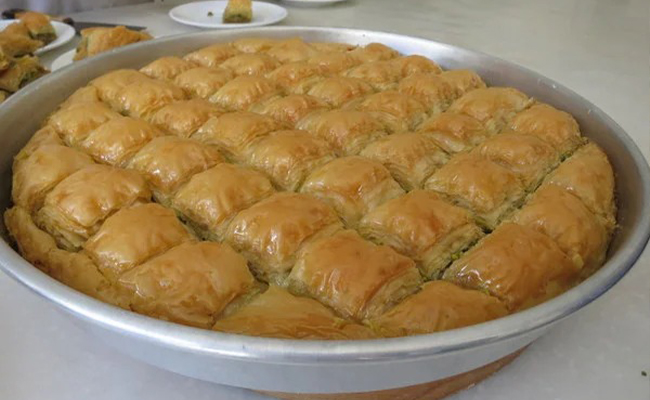
Antep Baklava is all about delicate layers, rich butter and intensely flavorful pistachios. For serious baklava lovers, it’s a must-try.
Greek Baklava
Greek baklava often features walnuts, cinnamon and aromatic spices, with a sweet syrup that may include honey.
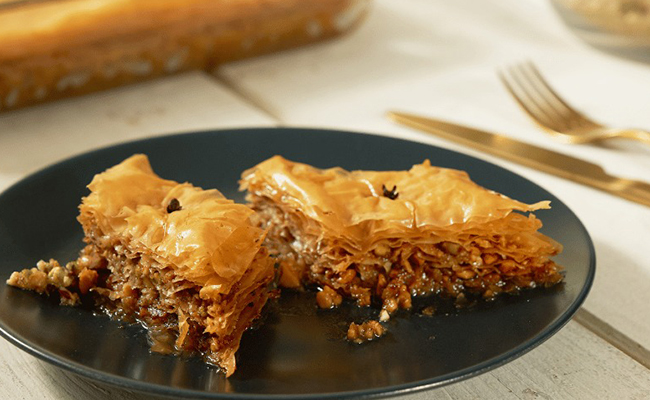
Compared with many Turkish versions, its flavor can feel warmer and more spice-forward, proof that small changes can create a completely different dessert experience.
Lebanese Baklava
Lebanese baklava brings a distinctly aromatic character to the table. Pistachios, walnuts, almonds and cashews may all appear, while rose water and orange blossom water add a fragrant twist.
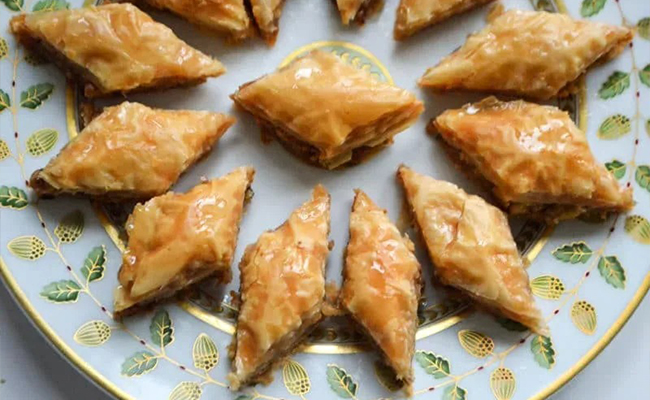
If you love desserts that are floral, nutty and delicate, Lebanese baklava deserves a spot on your list.
Şöbiyet
Imagine classic baklava with a creamy surprise inside.
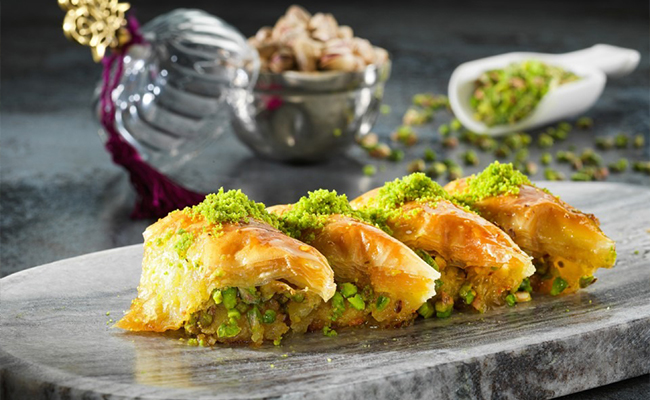
Şöbiyet combines crisp pastry with a creamy filling and pistachios, creating a richer, softer center beneath those flaky layers.
It’s an excellent choice if you’re torn between baklava and a creamy pastry.
Fıstıklı Sarma (Pistachio Baklava Roll)
Instead of being stacked and cut into squares, Fıstıklı Sarma is rolled around a generous pistachio filling.
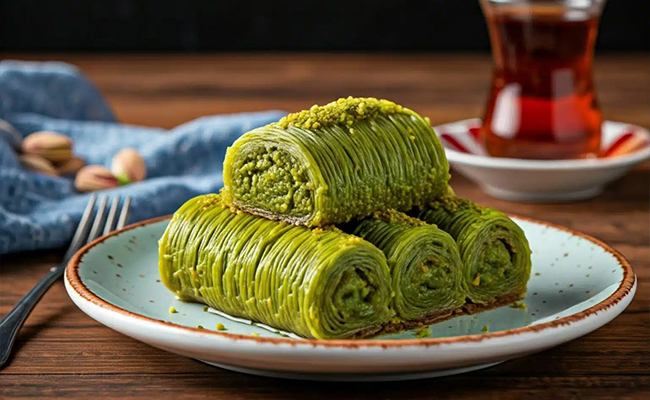
The result is a more concentrated nutty bite, with plenty of pistachio in every mouthful.
Bülbül Yuvası (Nightingale’s Nest Baklava)
One look at Bülbül Yuvası, and you’ll understand its name. Its curled, circular shape resembles a little nest.
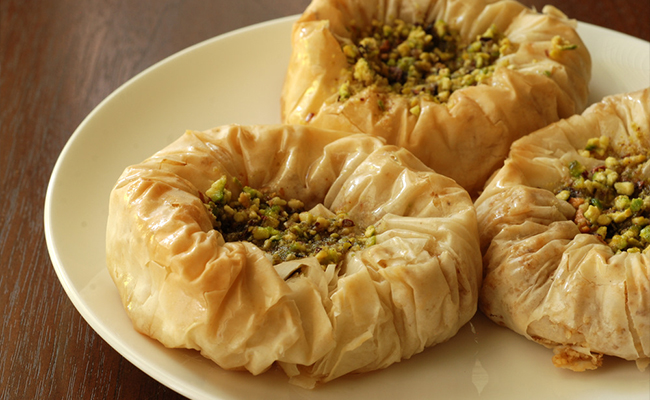
Usually filled with pistachios or walnuts, this variety combines attractive presentation with the crisp, buttery texture baklava lovers crave.
Havuç Dilimi (Carrot Slice Baklava)
Don’t let the name fool you. There are no carrots involved.
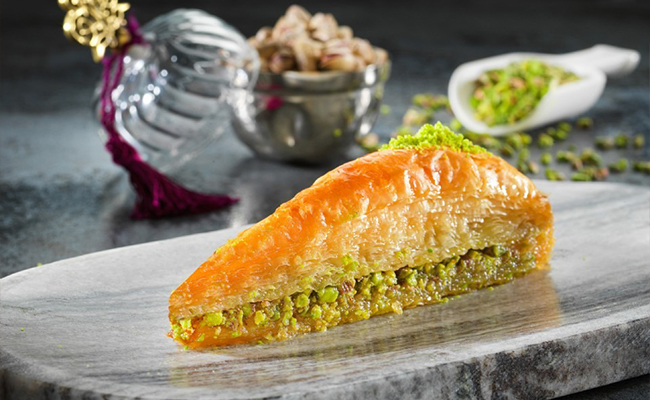
Havuç Dilimi gets its name from its elongated, carrot-like shape. It’s typically a generously sized slice packed with pistachios, making it perfect when a tiny square simply won’t satisfy your sweet tooth.
Kuru Baklava (Dry Baklava)
“Dry” baklava sounds like an oxymoron, doesn’t it?
But Kuru Baklava simply contains less syrup than traditional baklava. That means a crispier, lighter bite where the pastry and nuts take center stage.
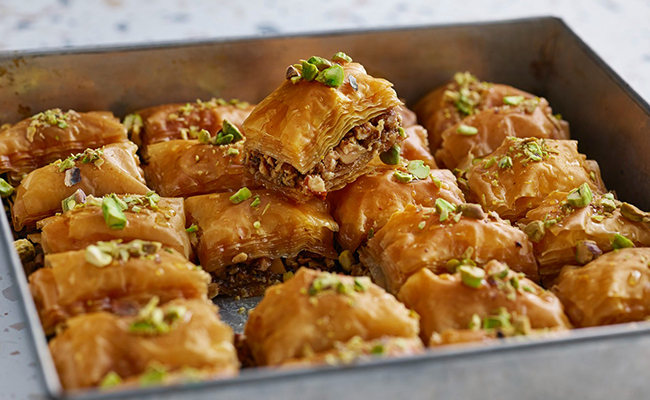
It’s a great option if you find heavily syrupy desserts too sweet.
Midye Baklava (Mussel-Shaped Baklava)
This may be one of the most visually unusual varieties. Midye Baklava is shaped like a mussel shell and is often filled with pistachios and cream.
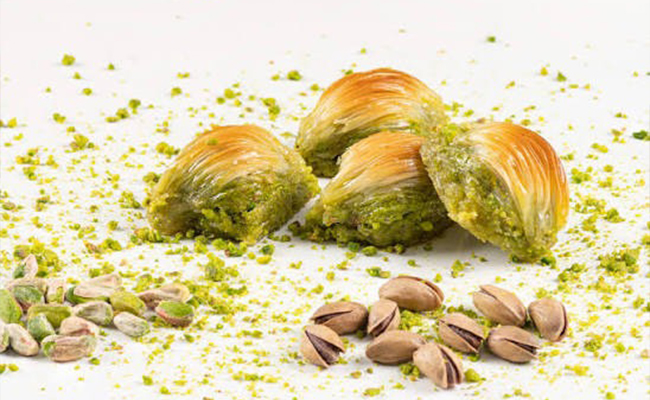
Crispy outside, rich and creamy inside—it looks as good as it tastes.
Dilber Dudağı (Sweetheart’s Lips Baklava)
With its distinctive oval shape, Dilber Dudağı is another Turkish specialty that’s hard to mistake for anything else.
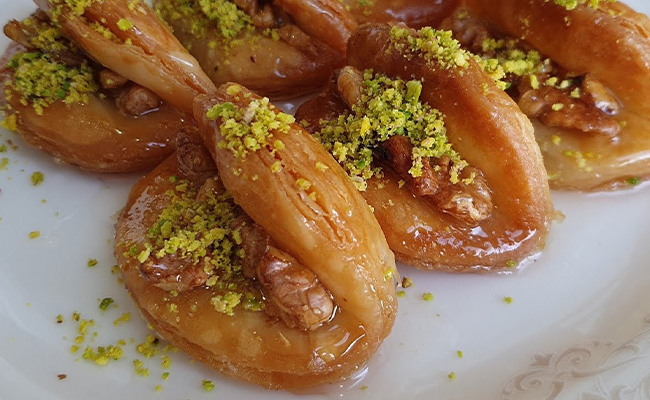
Its name translates roughly to “sweetheart’s lips,” and its delicate shape makes it a particularly charming addition to a Turkish pastry spread.
Sütlü Nuriye
Looking for something a little different? Sütlü Nuriye uses a milk-based syrup, giving it a softer, creamier character than traditional baklava.
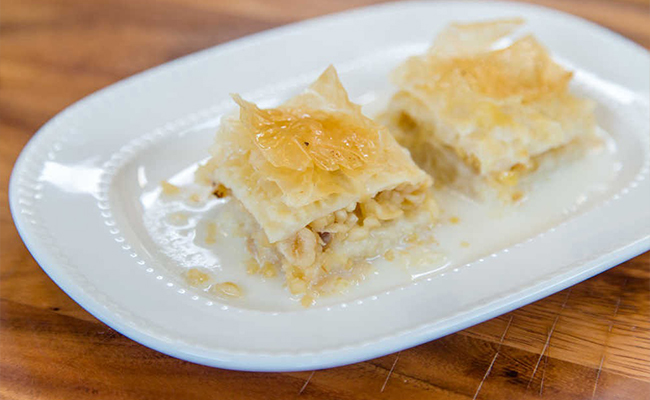
Hazelnuts or pistachios can add another layer of richness, making this a fascinating variation for anyone who wants to explore beyond the classics.
Persian-Style Baklava
Persian-style baklava takes the dessert in a wonderfully fragrant direction.
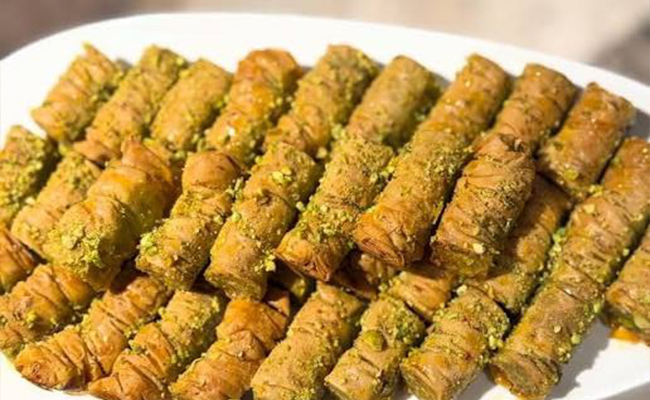
Pistachios and almonds may be combined with rose water, cardamom and sometimes saffron, creating a more aromatic flavor profile.
It’s baklava with a distinctly perfumed personality.
How to Eat and Serve Baklava
Baklava is delicious on its own, but the right pairing can make it even better.
-
Serve it with Turkish coffee or strong tea to balance its sweetness. For an indulgent dessert, pair warm or room-temperature baklava with a scoop of ice cream.
-
Because baklava is rich, small portions are often enough, and that’s good news when you want to sample several varieties in one sitting.
Which Baklava Will You Try First?
From pistachio-packed Fıstıklı Baklava to creamy Şöbiyet, crisp Kuru Baklava and fragrant Persian-style baklava, there’s no shortage of ways to enjoy this beloved dessert.
New to baklava? Start with classic pistachio baklava.
Love walnuts? Try Cevizli Baklava.
Prefer creamy desserts? Go for Şöbiyet or Midye Baklava.
Want something less syrupy? Kuru Baklava is calling your name.
And if you’re simply adventurous, work your way through all 15. And try go beyond!
After all, with this many varieties, choosing just one might be the hardest part.