
Table of Contents
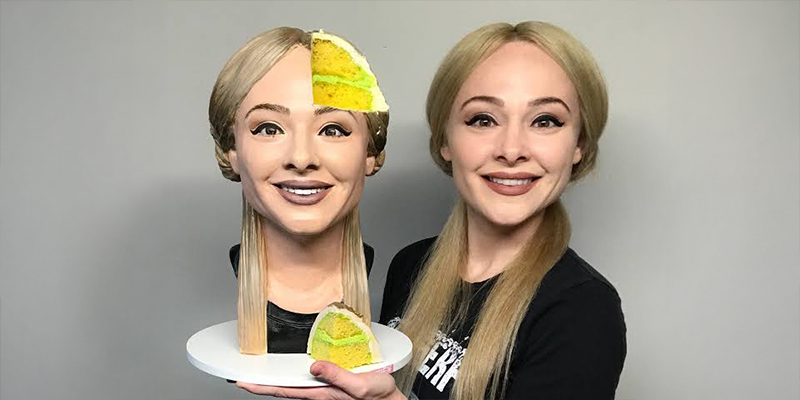
You spot a handbag on the table. Someone brings out a knife. A second later, you see sponge, cream, and frosting inside.
That tiny moment of disbelief is what makes hyper-realistic cakes so much fun.
These cakes are designed to look like real objects, from fruits and flowers to shoes, mugs, toys and even everyday household items. A cleverly made realistic cake can make people stare twice before they realise dessert has been hiding in plain sight.
But how do bakers make cake look that real? It comes down to a mix of observation, sculpting, colour, texture and some very clever decorating tricks.
What Actually Makes a Hyper-Realistic Cake Look Real?
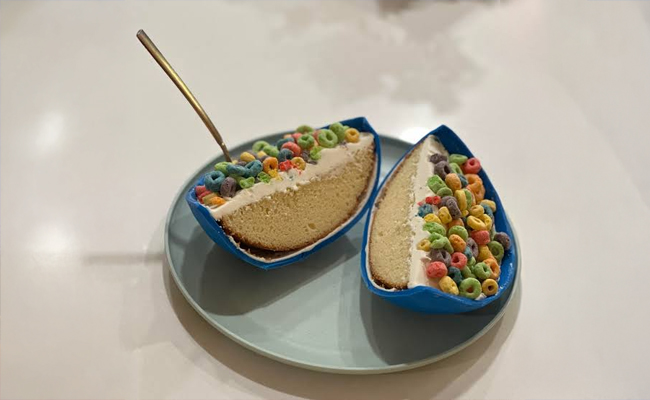
The process usually starts with one simple thing: looking very closely.
Cake artists study the object they want to recreate before they touch the sponge. They notice its shape, proportions, colour changes, shadows and tiny imperfections.
Think about an apple. It is not just round and red. It may have a slightly uneven surface, a darker patch near the stem and subtle changes in colour.
That is where the illusion begins.
A hyper-realistic cake usually needs these four things to work:
- Accurate shape: The basic form has to resemble the real object.
- Natural colours: Flat, single shades rarely look convincing.
- Realistic texture: Tiny bumps, folds, lines and marks make a big difference.
- Small imperfections: Oddly enough, perfect surfaces can make something look less real.
Once these elements come together, the cake starts looking less like dessert and more like the object it is copying.
The Techniques That Create the Illusion
This is where things get really interesting.
Cake artists often combine several techniques rather than relying on just one.
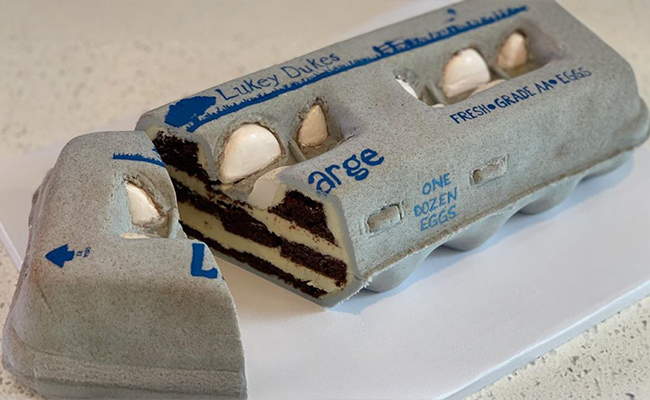
- Carving: Cake layers are trimmed carefully to create the right silhouette.
- Fondant work: Fondant can imitate smooth surfaces, fabric folds, petals and other fine details.
- Modelling chocolate: This works well for sculpting smaller or more detailed features.
- Airbrushing: Edible colour is sprayed lightly to create shadows, gradients and depth.
- Edible painting: Brushes add spots, veins, scratches, and highlights.
- Texturing: Special tools help recreate surfaces such as fruit skin, leather, wood or fabric.
A convincing realistic cake usually comes together by layering several of these methods.
The funny part is that many of the details are tiny. One painted shadow or textured edge may seem insignificant on its own, but together they completely change what your eyes think they are seeing.
How Colour and Texture Fool Your Eyes
Shape gets the first glance. Texture and colour make you believe it.
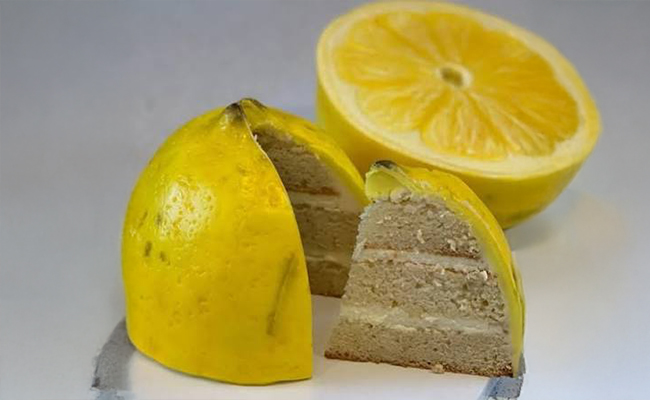
Imagine an orange-shaped cake with a completely smooth surface. The colour might be right, but something would still feel off.
Add tiny pores and uneven shading, and suddenly it looks far more convincing.
Cake artists recreate these effects using:
- Edible dusts for soft shading
- Brushes for tiny colour variations
- Texture mats for repeated patterns
- Sculpting tools for grooves and creases
- Edible glaze for glossy finishes
Colour also has to be layered carefully. Real objects rarely have one exact shade from top to bottom.
Fruit may have lighter patches. Leaves may have darker veins. Bread may have toasted edges. Even a simple mug may have reflections and shadows.
That is why cake artists often build colour gradually rather than applying one solid coating.
Why Are Hyper Realistic Cakes So Popular?
Because they are not just cakes. They are also a little guessing game.
People see the cake, question what they are looking at and then wait for the big reveal.
That makes them especially entertaining at birthdays, anniversaries, themed parties and surprise celebrations.
They can also be incredibly personal. Imagine gifting:
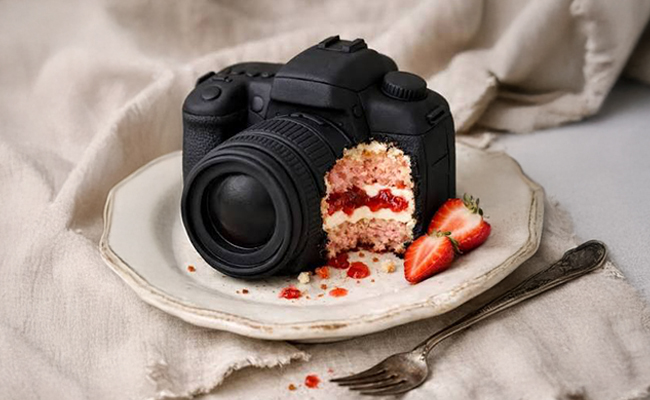
- A camera-shaped cake to someone who loves photography
- A flower pot cake to a gardening enthusiast
- A handbag cake to a fashion lover
- A coffee cup cake to someone who cannot start the day without caffeine
The cake becomes part dessert and part conversation starter.
Social media has made them even more popular. Videos of everyday looking objects being sliced open are oddly satisfying because viewers get that same surprise through a screen.
Of course, the final reveal may last only a few seconds. The work behind it can take hours.
Conclusion
Hyper-realistic cakes are where baking meets art, sculpture and visual trickery.
Cake artists use carving, colouring, texturing, fondant, modelling chocolate and edible paint to make sponge resemble something completely unexpected.
And that is really the charm of it.
For a moment, your eyes are convinced you are looking at an ordinary object. Then someone cuts into it, the layers appear, and the whole illusion becomes something you can actually eat.