
Table of Contents
Frosting a cake is more than just spreading a sugary layer over a delicious dessert. It’s about enhancing both the taste and the visual appeal of your cake. A well-frosted cake can turn an ordinary bake into something extraordinary.
But here’s the good news: frosting a cake is easier than you think, and with a little practice, you can achieve stunning results.
By the end of this guide, you’ll have a core knowledge on how to frost a cake, whether you’re a complete beginner or just looking to improve your skills.
Tools You’ll Need
Before you dive into frosting, gather a few tools to make the process smoother. Don’t worry, you don’t need fancy equipment to get started. Here’s a list of what you’ll need:
Offset spatula or butter knife
- Bench scraper (optional)
- Turntable (optional but helpful)
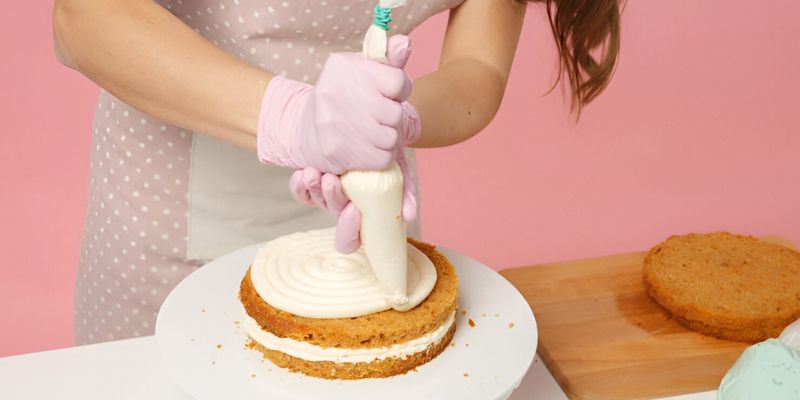
- Piping bag (optional)
Tip: If you don’t have all the tools listed, don’t stress! You can still frost your cake with basic kitchen items.
Step-by-Step
Now, let’s break down the frosting process into manageable steps. It’s all about layering, chilling, and spreading with care.
Step 1: Apply the Crumb Coat
A crumb coat is a thin layer of frosting that helps seal in any loose crumbs before you apply the final layer. This step is important because it prevents crumbs from mixing into your final frosting, which would ruin the smooth texture you’re aiming for.
How to Do It:
- Apply a thin, even layer of frosting to the entire cake.
- Don’t worry about perfection here – this coat is simply to trap crumbs.
- The layer should be thin enough that the cake still shows through slightly.
Step 2: Chill the Cake
Once the crumb coat is on, it’s time to chill your cake. This step helps firm up the frosting, making it easier to apply the final coat.
How Long to Chill:
- Chill the cake for at least 30 minutes in the fridge.
- This helps the crumb coat set and prevents the frosting from slipping off as you work.
Step 3: Apply the Final Layer of Frosting
Now for the fun part – the final coat of frosting! This is where you’ll achieve the smooth, professional-looking finish you’ve been working towards.
How to Do It:
- Apply a generous amount of frosting to the top of the cake.
- Use an offset spatula to spread the frosting evenly, starting from the centre and working your way out to the edges.
- For the sides, use a bench scraper (or just your spatula) to smooth the frosting down, creating a clean and even finish.
Tip for Beginners: Don’t rush! Apply frosting in layers and build it up gradually to get the smoothest look.
Types of Frosting
Choosing the right frosting can be as important as mastering the technique. Here’s a quick overview of common types of frosting:
- Buttercream: This is the go-to frosting for beginners. It’s easy to work with and holds its shape well.
- Whipped Cream: Light and fluffy, perfect for a delicate touch.
- Cream Cheese Frosting: Rich and tangy, this is a great option for carrot or red velvet cakes.
- Ganache: Made with chocolate and cream, ganache gives a smooth, glossy finish, ideal for more decadent cakes.
How to Get Different Finishes
Once you’ve mastered the basic frosting technique, it’s time to play with different finishes! Here are a few ideas:
- Smooth Bakery-Style Finish: For that polished, professional look, use a bench scraper to smooth the sides and top.
- Rustic Swirl Finish: For a homemade vibe, use a spoon to create gentle swirls in the frosting.
- Naked or Semi-Naked Cake: Leave some of the cake exposed for a more natural, rustic look.
- Textured or Patterned Sides: Add texture by gently scoring the frosting with a fork or creating patterns with a piping bag.
Common Mistakes to Avoid
Avoid these common frosting mistakes to ensure your cake looks as good as it tastes:
- Frosting a warm cake: Always let your cake cool before frosting it. Frosting a warm cake will cause the frosting to melt.
- Using too little frosting: It’s tempting to go light on the frosting, but more is often better. You’ll get a smoother finish and a richer taste.
- Skipping the crumb coat: The crumb coat is key for a clean, professional look. Don’t skip this step!
- Overworking the frosting: If you work the frosting too much, it can become too soft. Apply it quickly and evenly for the best results.
Pro Tips for a Perfect Frosted Cake
Here are a few extra tips to take your frosting game to the next level:
- Warm Spatula Trick: Dip your spatula in warm water before smoothing the frosting. It helps create a smoother finish.
- Rotate the Cake, Not Your Hand: Use a turntable to rotate the cake as you work, rather than twisting your wrist.
- Chill Between Steps: If the frosting starts to soften, chill the cake for a few minutes and then continue.
- Use More Frosting Than You Think: A thicker layer will give you a smoother, more polished result.
Frosting a cake is a skill that improves with practice, so don’t be discouraged if your first attempt isn’t perfect. With these simple steps, tools, and pro tips, you’ll be able to create cakes that look as good as they taste. Remember, the most important part is to enjoy the process, and with time, you’ll be frosting cakes like a pro. Happy baking!