
Table of Contents
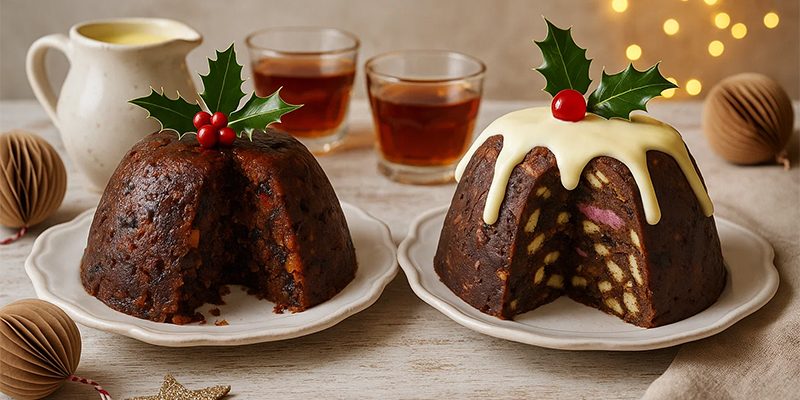
With the holiday season fast approaching, many of us are on the lookout for sweet treats to add to the celebrations. Some might even be wondering, “What is the name of the traditional Christmas dessert made with dried fruit and spices?” If you’re curious, we’ve got the answer: it’s Christmas pudding! Also known as plum pudding, this rich, spiced dessert has been a holiday favourite for generations. In this post, we’ll share a traditional Christmas pudding recipe so you can enjoy this festive treat in your own home.
Ingredients (for a classic pudding serving 6–8)
- Mixed dried fruit — raisins, currants, sultanas (and optionally chopped dried figs or prunes)
- Candied citrus peel or apple peel, chopped
- Breadcrumbs (to bind)
- Suet (or replace with cold butter/vegetable fat, if you prefer)
- Brown sugar or dark sugar/treacle
- Flour (a little)
- Mixed spices — ground cinnamon, nutmeg, cloves, maybe a pinch of allspice or ginger
- Eggs (to help bind)
- A good glug of alcohol — brandy, rum or sherry (optional, but classic)
- A bit of milk — enough to moisten mixture
You can also grate in some lemon or orange zest for extra brightness, or stir in chopped nuts if you like added texture.
Baking Steps
1. Soak the fruit
Begin by placing all your dried fruit (and candied peel, if using) in a bowl. Add a splash of brandy, rum or even fruit juice, enough to partially soak the fruit. Let this sit for several hours — ideally overnight. That ensures the fruit plumps up, absorbs moisture and flavours the pudding deeply.
2. Mix the dry ingredients
In a large bowl, stir together the breadcrumbs, flour, sugar (or treacle), suet (or butter), mixed spices, citrus zest, and optional nuts. Combine thoroughly so the dry mixture is evenly spiced and scented.
3. Add fruit, eggs and liquid
Drain the soaked fruit (reserve any leftover brandy for cooking or for “feeding” pudding later). Fold the fruit and peel into the dry mix. Crack in the eggs and stir gently. Add a little milk to moisten — aim for a thick but droppable batter. If using brandy or rum, add a tablespoon or two for depth and traditional festive warmth.
4. Pack the pudding basin
Grease a pudding basin or heat‑proof bowl generously. Spoon in the mixture and press lightly so the batter is compact. Cover the bowl with a sheet of parchment or greaseproof paper, then foil. Tie securely with kitchen string (if using cloth wrap, make sure it’s well-wrapped and sealed).
5. Steam the pudding
Place the basin in a deep pot of simmering water — water should reach about halfway up the side of the basin. Cover and steam gently for several hours (commonly 2.5–4 hours, depending on size). If needed, top up water occasionally to keep the level steady.
When done, turn off the heat, carefully lift out the basin and let it cool. At this point, you can let the pudding mature — many traditional recipes recommend making the pudding weeks before Christmas, allowing it to deepen in flavour over time.
6. Reheat and serve on Christmas Day
On the day you want to serve, steam the pudding again for about 1 hour until thoroughly heated. For a classic touch, warm a little extra brandy, pour over the pudding and carefully light it — the flaming finish adds drama and tradition.
Serve it with brandy butter, custard, cream, rum sauce or even vanilla ice‑cream for contrast.
A Few Tips for a Perfect Pudding
Keep these tips in mind while recreating this Christmas pudding recipe for optimal results.
- Use a generous mix of different dried fruits — currants, raisins, sultanas, maybe chopped prunes or figs — to get a complex taste and texture.
- Let the batter rest: a traditional pudding made weeks ahead develops richer, deeper flavours.
- Don’t skip the alcohol (if you can): a little brandy or rum helps preserve the pudding and gives it that warm, festive fragrance.
- If you want a vegetarian version, substitute suet with cold butter or vegetable fat.
- Customise with citrus zest, nuts, perhaps a splash of rum or dark tea — Christmas pudding is wonderfully forgiving.
And that’s a wrap on this blog! By making your own traditional Christmas pudding, you’re not just preparing a dessert — you’re embracing centuries of festive tradition. So, give this recipe a try! Once you taste the pudding, you’ll understand why this beloved treat has become a timeless Christmas classic.