
So, you’ve baked the perfect cake, and now it’s time to give it that professional, polished look. We’re talking about fondant icing a cake. The smooth, silky finish that turns your creation into a showstopper. If you’re new to this, don’t worry. I’ve got you covered! Let’s walk through the process together, step by step, so you can achieve that flawless finish without feeling overwhelmed.
Step 1: Bake the Cake and Prepare Your Workspace
Before you dive into fondant icing a cake, you need a solid base. That means baking your cake perfectly. Whether you’re making a rich chocolate sponge or a light vanilla layer, just ensure it’s completely cooled before starting. A warm cake will melt your fondant, and trust me, you don’t want that!
Next, clear your counter and gather your tools. You’ll need a rolling pin, a non-stick surface (like a silicone mat or parchment paper), and, of course, your fondant. A clutter-free workspace will help you stay organised as you work.
Step 2: Apply a Crumb Coat
You can’t just go straight into fondant icing a cake without a little prep. The crumb coat is a thin layer of buttercream or ganache that seals in any crumbs and provides a smooth surface to work on. Without it, your fondant might trap crumbs, and that’s not the look we’re going for.
Spread a thin layer of buttercream over the whole cake with a spatula. No need for a thick coat, just enough to cover. Pop the cake in the fridge for 30 minutes to set. Once that crumb coat is firm, your fondant will adhere nicely and stay in place.
Step 3: Roll Out the Fondant
Now, the fun part! Roll out your fondant. Knead it for a few minutes to soften, then roll it out on your non-stick surface to about 3mm thick. This thickness is perfect, not too thin, but enough to cover your cake without ripping.
A little dusting of cornflour or icing sugar on the surface will stop it from sticking. Just don’t go overboard. Too much can leave marks on your fondant, and we want a smooth finish.
Step 4: Drape the Fondant Over the Cake
Once your fondant is rolled out, it’s time to cover the cake. You can either roll the fondant with a rolling pin or lift it by hand. Either way, drape it over your cake quickly. Don’t stress if it looks a bit messy initially, that’s all part of the process.
Once it’s on the cake, you’ll start smoothing it out.
Step 5: Smooth the Fondant
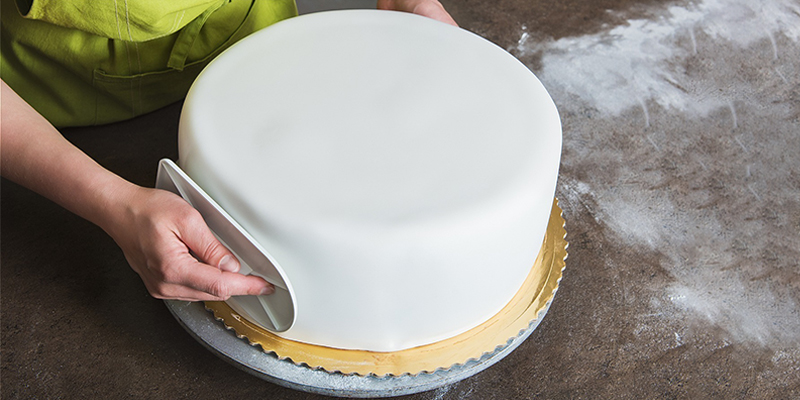
This is where your patience really pays off. Start smoothing the fondant from the top, gently working your way down the sides. Use your hands or a fondant smoother to flatten out any air bubbles or creases. The more even you can get it, the better. It doesn’t need to be perfect just yet, but try to get a nice, smooth surface.
If you find any air pockets or folds, gently rub them out. Take your time; a smooth finish is the key to a polished cake.
Step 6: Trim the Excess Fondant
Once your fondant is smoothed out, it’s time to trim the excess. Use a sharp knife or a pizza cutter to cut along the base of the cake where the fondant meets the cake board. Leave about an inch of extra fondant hanging down. Once you’ve done that, carefully trim off the extra fondant.
Don’t stress if the edges aren’t perfect yet. We’ll tidy them up next.
Step 7: Neaten the Edges
Now that the bulk of the fondant is in place, it’s time to clean up the edges. Gently tuck the fondant around the base of the cake to create a neat, crisp line. Use a fondant tool or your hands to press the fondant against the cake board, making sure it’s sharp and even.
If you spot any imperfections, smooth them out by hand or with a fondant smoother. This is the final step to get those sharp, professional edges.
Step 8: Add Decorative Touches
Now, the fun part: decorating the cake! Whether you’re adding a personalised message, shaping flowers from fondant, or creating intricate designs, the world is your oyster. Let your creativity run wild. You can use fondant cutters to create neat shapes or even texture the fondant with various tools to make it unique.
Step 9: Let It Set
Once you’ve finished decorating, let your cake sit for a while. Fondant needs time to firm up slightly, so leave it uncovered in a cool spot for at least 30 minutes. This ensures your hard work stays intact and doesn’t melt.
Final Thoughts
And there you have it, fondant icing a cake made easy! It might feel tricky at first, but remember, the more you practice, the better you’ll get. The key is patience, and with a bit of time and effort, you’ll be icing cakes like a pro in no time. If it’s your first go, don’t worry if everything isn’t perfect; it’s all part of the learning process. Enjoy the journey, and most importantly, enjoy the cake!